ServicesElectrical Repair
Electrical Repair in Benbrook for Older Wiring and Newer Problems
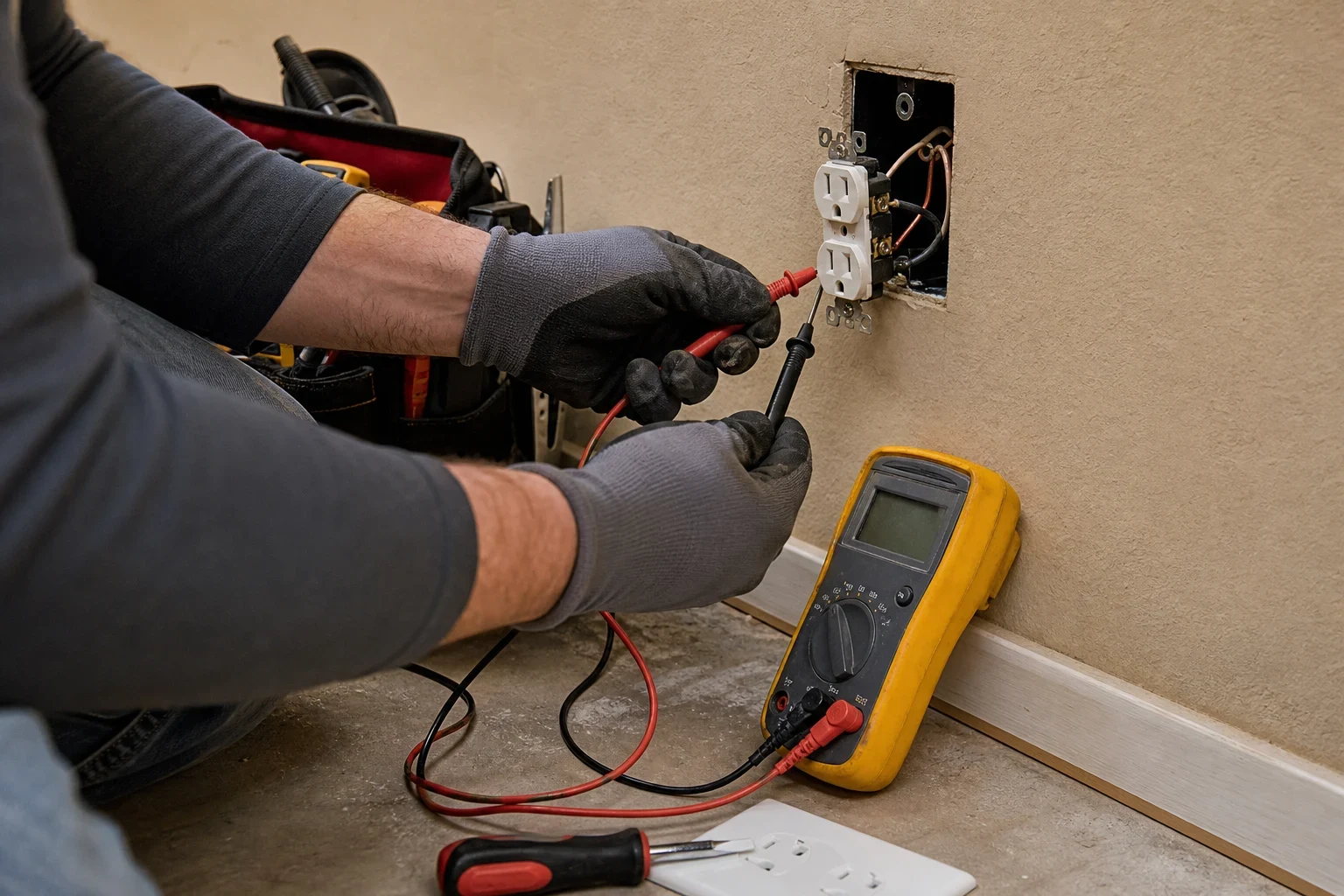
If a circuit keeps shutting itself off, a receptacle has lost power or a cover plate feels hot, we test under load, open the boxes and locate the failed splice or part. You hear what failed, why it failed and what the fix involves before we start.
What Electrical Repair Covers
Most repair calls trace back to a short list of causes: a terminal screw or splice that loosened over years of heating and cooling, a receptacle or switch at the end of its life, a circuit asked to carry more than its wire size allows, or a past fix done incorrectly. The symptom often appears somewhere other than the fault. A dead bedroom outlet can trace back to a backstabbed receptacle two rooms away that finally lost contact.
Older houses add their own layer. We regularly open boxes and find cloth-insulated wire that has gone brittle, aluminum branch wiring on devices not rated for it, splices buried in walls with no box, and breakers that no longer trip when they should. We repair the fault you called about and tell you plainly about anything else we saw, without pushing work you don't need.
We also check how each circuit is protected. Older panels sometimes hold breakers that are the wrong brand or the wrong size for the wire they feed, and a 20-amp breaker on 14-gauge wire lets that wire overheat before it ever trips. Correcting a mismatch like that is part of doing the repair right, not an add-on.
What a Repair Visit Includes
- Circuit testing at the source
- We check voltage under load, not just with the circuit idle. A connection can read fine with nothing plugged in and drop badly once a space heater or vacuum pulls current.
- Outlet and switch replacement
- Worn receptacles that no longer grip a plug, scorched switches and backstabbed devices get replaced with side-wired or clamp-style connections that hold tight over time.
- Breaker and panel connection repair
- We replace breakers that trip under normal load or won't reset, and tighten loose lugs and bus connections. Discolored plastic or a burnt smell at the panel points us straight to these.
- Splice and junction box corrections
- Hidden splices from past remodels get pulled into accessible, covered boxes with proper connectors. Where we find aluminum wire, we use connectors rated for joining it to copper.
- GFCI and AFCI troubleshooting
- We find out whether a protective device is tripping because it is failing or because it is doing its job and catching moisture, a ground fault or arcing downstream.
Signs Your Wiring Needs a Repair
Breakers that trip again and again
A breaker that trips once under a heavy load is working. One that trips daily points to an overloaded circuit, a short or a breaker that has weakened with age.
Lights that dim or brighten on their own
Lights that surge brighter when a large appliance starts often mean a loose or failing neutral. That can push high voltage to electronics and should be checked soon.
Warm or discolored outlets and switches
Heat at a cover plate means resistance at a connection. Brown marks or melted plastic mean it has already been running hot for a while.
Outlets that stopped working
Before assuming a wiring fault, we check for a tripped GFCI elsewhere on the line. If it isn't that, the cause is usually a failed connection upstream.
Buzzing, crackling or a burning smell
These point to arcing. Turn that circuit off at the panel and leave it off until it has been inspected.
Outdoor receptacles that keep failing
Covers left open and cracked gaskets let rain into exterior boxes, which corrodes terminals and trips GFCI protection after every storm.
How a Repair Visit Runs
- 1
Describe what's happening
When you phone us, tell us what the problem does, when it started and what else is on that circuit. That helps us bring the right parts the first time.
- 2
Test and trace
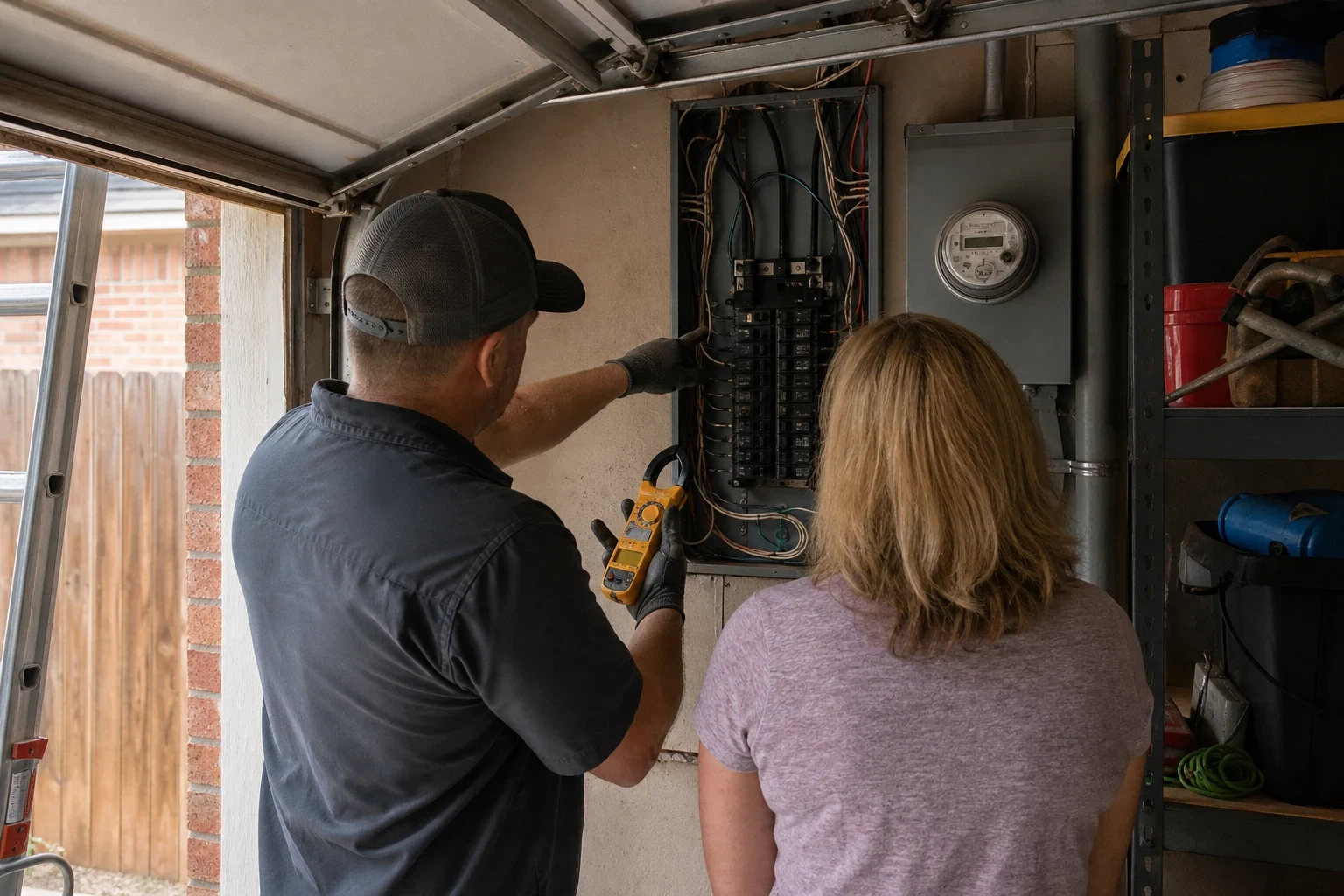
We map the affected circuit at the panel, test under load and open the devices and boxes involved. If the fault turns out to be an old repair, we show you what we found.
- 3
Explain and agree on the fix
You get a clear explanation of the cause, the repair and the price before we start. If a larger job like rewiring a section or a panel upgrade makes more sense, we say so and why, and you decide.
- 4
Fix, check and tidy up
Once the fix is in, we put the circuit back under load and compare the readings to what we measured before. Each GFCI and AFCI gets tripped to be sure it cuts power the way it should. Cover plates go back on, and the wire scraps and dust leave with us.
What Moves the Price of a Repair
Most of a repair bill is time: time spent tracking down the fault and time spent on whatever turns up inside the box. A loose connection at one outlet is quick work. A failing neutral shared across several rooms takes longer to trace. You hear the price for the repair before we begin.
- How hard the fault is to find
- Intermittent problems that only show up under certain loads take more testing time than a device that is plainly scorched.
- Access to the wiring
- Boxes behind built-ins, attic runs in summer heat and crawlspace connections all add time compared with an open wall outlet.
- Condition of the existing wiring
- Brittle insulation or aluminum conductors can mean extra connectors, short wire replacements or pigtailing to make the repair hold.
- Parts required
- A standard receptacle costs far less than an AFCI breaker or a specific replacement breaker for an older panel.
- Permit requirements
- Some repairs need a permit and inspection as required by the local jurisdiction. We tell you up front when that applies.
Electrical Repair Questions
Something not covered here? (682) 204-9915
Why does my breaker keep tripping?
Usually it comes down to one of three things. The circuit may be carrying more than it was sized for, current may be shorting or leaking to ground somewhere along the wire, or the breaker itself may have worn out. Kitchens and rooms running window units or space heaters overload most often. We test to find out which it is, because swapping a breaker that is correctly reacting to a short only hides the problem.
Who will be working on my wiring?
We hold a Master Electrical License, and the company is an electrical contractor under TECL 36609. The electricians who come to your home are licensed and insured.
Do you pull permits for repairs?
When a repair requires a permit, we pull it and schedule the inspection as the local jurisdiction requires. Many small repairs, like swapping a failed receptacle, don't need one. We tell you which applies before the work starts.
My house is older. Will one repair turn into a full rewire?
Not usually. Most older wiring can be repaired at the failed point and keep working safely. If we find widespread brittle insulation, ungrounded circuits feeding modern loads or repeated heat damage, we show you and explain your options, including whole-home rewiring, but the choice stays yours.
Do you come out right away for urgent problems?
We work by scheduled service visits. If you smell burning or see sparks, switch that circuit off at the panel, keep it off and phone us to set up a visit. If there is smoke or fire, call 911 first.
Get the Fault Found and Fixed
Tell us what your outlets, lights or breakers are doing, and we'll set up a time to test the circuit and repair it. Our service area includes Benbrook, Fort Worth, Aledo and nearby towns.