ServicesEV Charger Installation
EV Charger Installation in Benbrook
Before we mount a charger, we check whether your panel and service can handle a long, steady 240-volt load. Then we run a circuit that serves only the charger, matched to its actual amperage, so your car charges at full speed without nuisance trips or hot connections at the breaker.
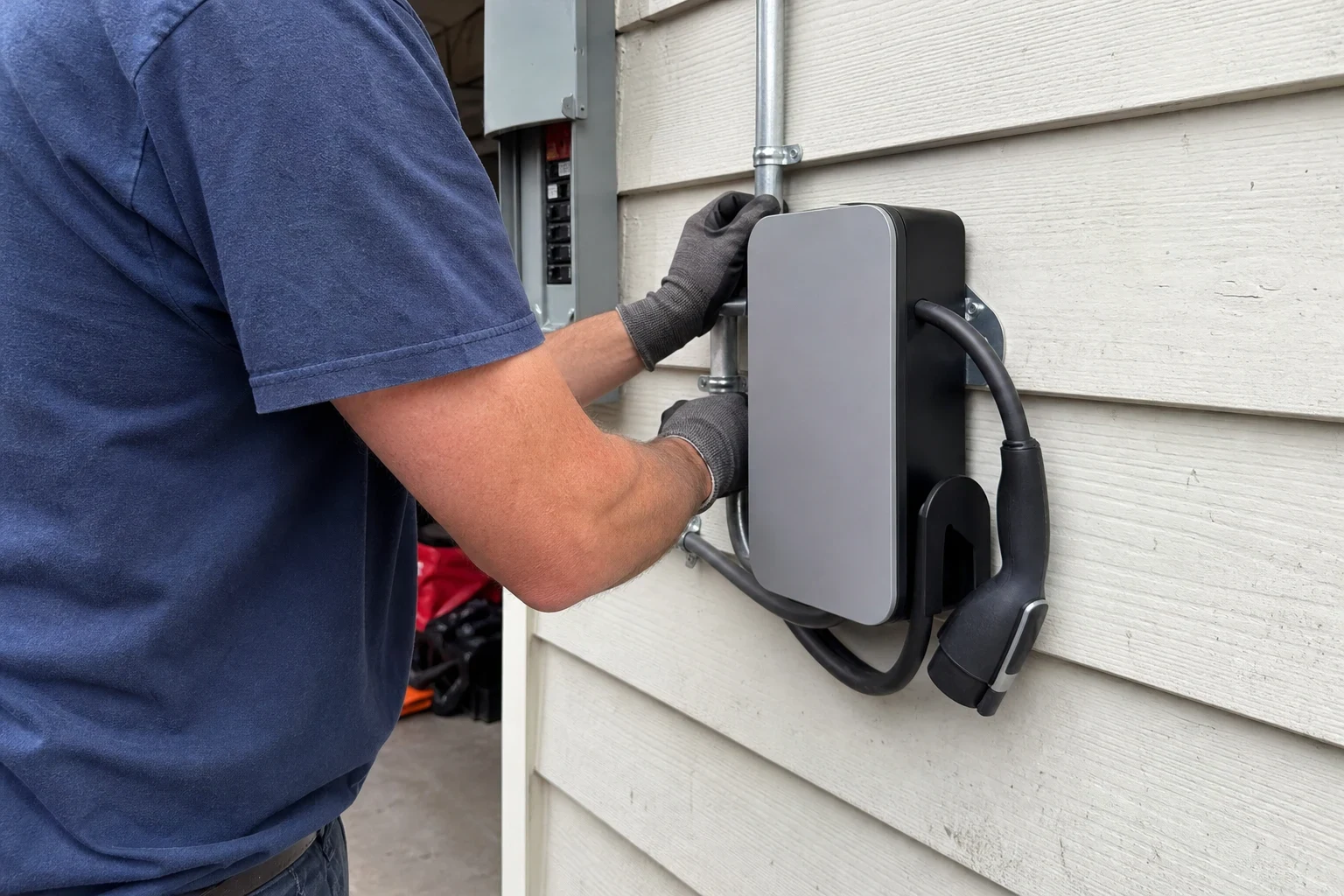
A Charger Circuit Built Around Your Panel
A Level 2 charger is a continuous load. It can pull 32 to 48 amps for hours at a time, and the electrical code treats it that way: the circuit and breaker must be rated at 125 percent of the charger's output. A 40-amp charger needs a 50-amp circuit, wire sized to match and a breaker with room in the panel to land it.
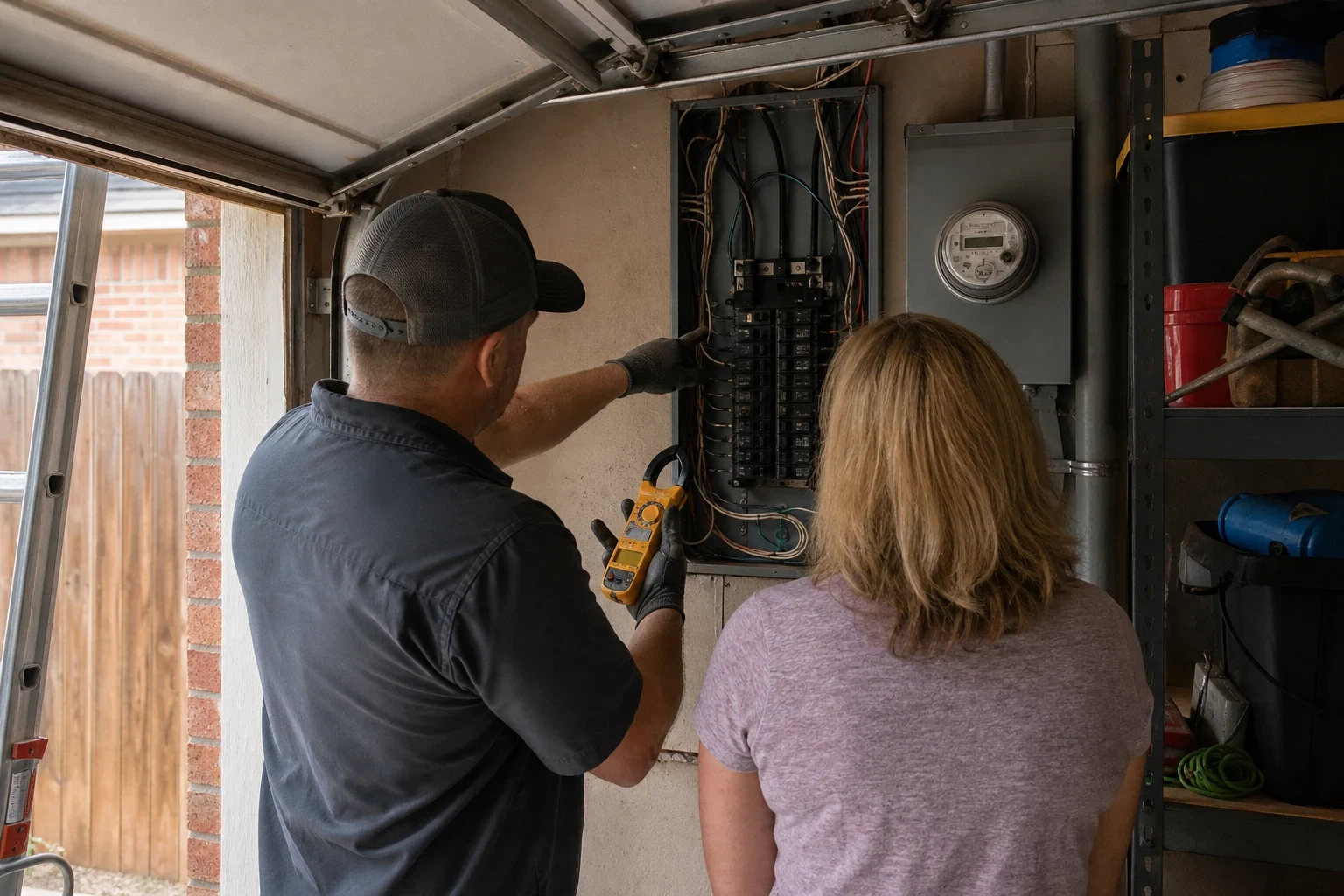
That last part is where many houses run into trouble. A panel installed decades ago may be a 100-amp service that already carries a central air unit, an electric dryer and a range. It may have no open spaces, or it may be a brand with a poor record for breakers that don't trip. We look at all of it before quoting, because a charger added to a panel that can't take it simply moves the problem somewhere you can't see.
Every install is done under a Master Electrical License. We are a licensed electrical contractor, TECL 36609, and the people working in your home are licensed and insured electricians.
What the Installation Covers
- Load calculation
- We add up what your home already draws and what the charger will add. That tells us whether the existing service is enough, whether a lower charger setting makes sense or whether a panel upgrade belongs in the plan.
- Dedicated 240-volt circuit
- The charger gets its own double-pole breaker and copper wire matched to the circuit rating, routed in conduit or approved cable to where you park. No other outlet or appliance is tied into it.
- Outlet or hardwired connection
- We can install a NEMA 14-50 receptacle for a plug-in charger or hardwire a wall unit. Hardwiring avoids the wear a receptacle takes from repeated plugging and lets many chargers run at their highest setting.
- Protection the code calls for
- We include GFCI protection where it is required, a proper equipment ground and a disconnect where the charger's rating calls for one.
- Paperwork and sign-off
- We file the paperwork your local building office asks for and line up the inspector's visit once the wiring is in. If the utility has to be involved, for example with a meter or service change, we make that contact too.
- Setup and a test charge
- We set the charger's amperage to match the breaker, confirm voltage under load and watch the first session start before we leave.
Signs Your Home Needs Work Before a Charger
Charging off a 120-volt outlet
A standard outlet adds only a few miles of range per hour. Running it for long stretches also heats older receptacles with worn contacts, which is a common source of scorched outlets.
A full panel with tandem breakers
Slim double-stuffed breakers usually mean someone ran out of spaces years ago. A charger needs a full two-pole space, and we check whether your panel is even listed to accept more tandems.
Lights dim when the AC starts
Noticeable dimming when a big motor kicks on can point to a loose service connection or a service that is already near its limit. Both matter before adding a 40-amp load.
An outdated panel brand
Federal Pacific Stab-Lok and Zinsco panels have known breaker problems. We will tell you plainly if yours should be replaced rather than loaded further.
Warm breakers or a burning smell
Heat at the panel means a connection is failing. That gets fixed first, and electrical repair or a torque and clean visit is often the right starting point.
How the Day Goes
- 1
Look at the panel and the route
We open the panel, check its rating, bus condition and available spaces, and measure the run to where you park. In a garage on the far side of the house, the route through the attic or along an exterior wall drives most of the labor.
- 2
Confirm the plan and price
You get the circuit size, the connection type and anything the panel needs, explained in writing before work starts. If an upgrade is needed, we say so and why.
- 3
Install the circuit
We set the breaker, pull the conductors, mount the receptacle or charger and torque every termination to the manufacturer's spec. Loose lugs are a leading cause of heat damage on high-draw circuits.
- 4
Test and inspect
We verify voltage and grounding, run a test charge, clean up drilling dust and wire scraps, and meet the inspector when the visit is scheduled.
What Moves the Cost
Most of the price comes from the distance between your panel and your parking spot and from what the panel can handle today. A short run beside a panel with open spaces is a very different job from a long attic run to a detached garage. We give you a written price after we've seen both.
- Panel capacity
- If the load calculation shows your service can't support the charger, a panel or service upgrade becomes part of the job. Sometimes a lower charger setting or a load-management device avoids that, and we'll walk through the trade-offs.
- Length and route of the run
- Heavy-gauge copper is priced by the foot. Runs through finished walls, crawl spaces or outdoors in buried conduit take more time and material than a straight shot across a garage wall.
- Charger type
- Hardwired units and higher-amperage settings need larger wire and breakers. A 14-50 receptacle on a 50-amp circuit is usually simpler.
- Permit and corrections
- Permit fees vary by jurisdiction. If we find unsafe existing wiring at the panel, we point it out with the fix and its cost, and you decide what to do.
EV Charger Questions
Something not covered here? (682) 204-9915
Can my 100-amp panel handle an EV charger?
Often it can, but only a load calculation answers it. Many 100-amp homes can run a charger set at 24 to 32 amps without trouble. If gas appliances carry the heating and cooking, there is usually more headroom than people expect. If the numbers don't work, we'll explain your options, including a panel upgrade.
Should I get a plug-in charger or a hardwired one?
A NEMA 14-50 outlet gives you flexibility to swap chargers later. A hardwired unit removes the receptacle as a wear point and usually allows the full 48-amp setting. We'll help you match it to your car's onboard charger and how far you drive.
Can you install the charger outside, near the driveway?
Yes. We use outdoor-rated equipment, weatherproof fittings and conduit sized for the conductors. In North Texas summers, we also check the charger's temperature rating and recommend a shaded spot where it's possible.
Do you pull the permit?
Yes. Getting the permit is part of our job, and we book the inspection with whichever office covers your address. You end up with a record that the circuit passed inspection, which helps if you sell the house or file an insurance claim.
How long does an installation take?
A straightforward install near the panel is typically done in part of a day. Long runs, exterior trenching or panel work add time, and we'll tell you what to expect when we confirm the plan.
Get Your Garage Ready to Charge
We'll check your panel, measure the run and tell you exactly what the install needs. We serve Benbrook along with Fort Worth, Aledo and nearby towns.