ServicesGenerator Installation
Generator Installation in Benbrook
We size the generator to what your home actually draws, install the transfer switch that keeps it isolated from the utility, and check your panel and wiring first. Older panels often need attention before a generator can tie in safely.
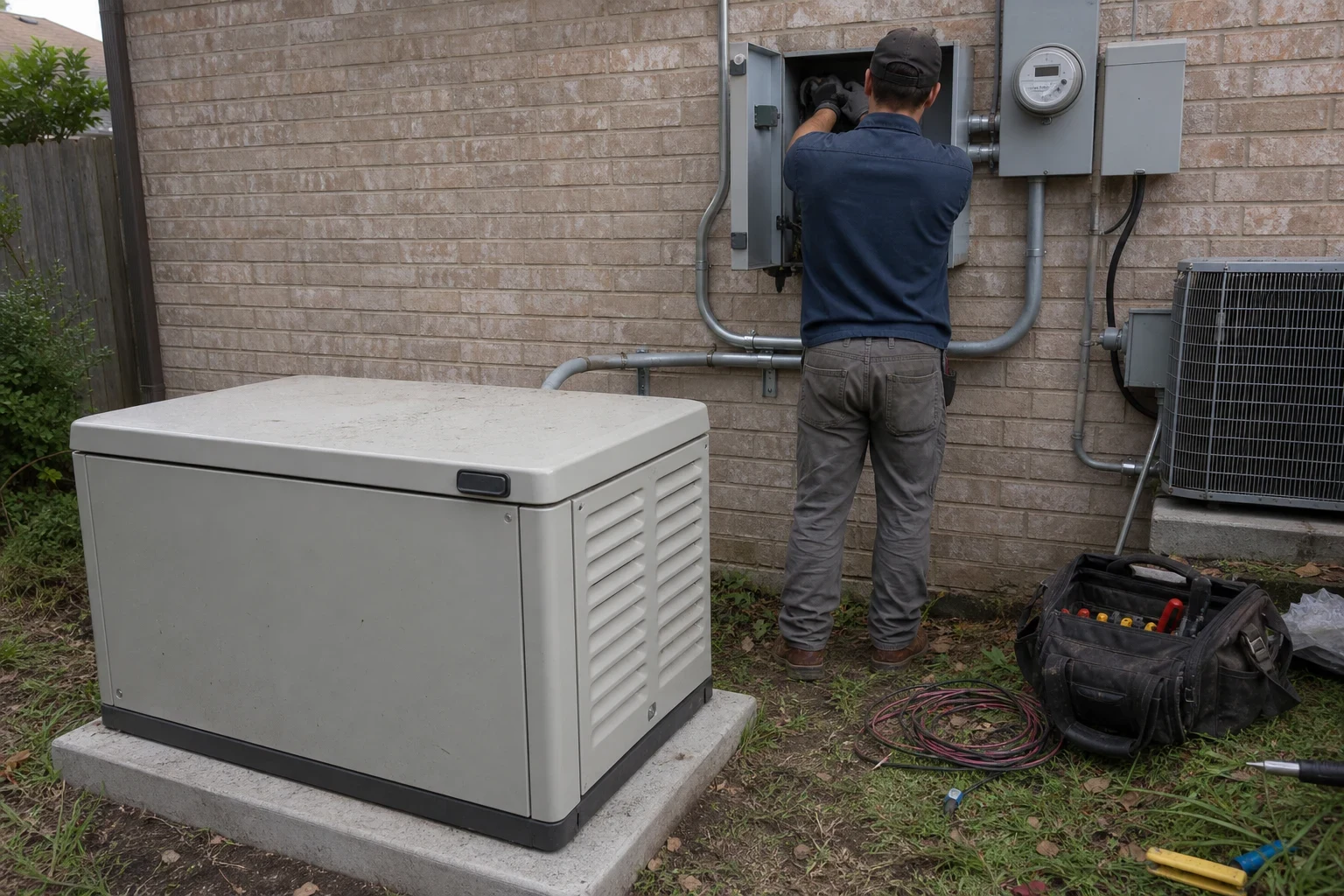
What a Proper Generator Hookup Involves
The transfer switch is the part that makes backup power safe. It separates your home from the utility lines before generator power comes in, so nothing backfeeds onto the grid where line crews may be working, and the generator is never tied in when utility power returns.
We install permanent standby units with an automatic transfer switch, and we wire portable generators through an inlet box and a listed interlock kit on your panel. Both approaches are done to code, with the permit and inspection handled as required by your local jurisdiction.
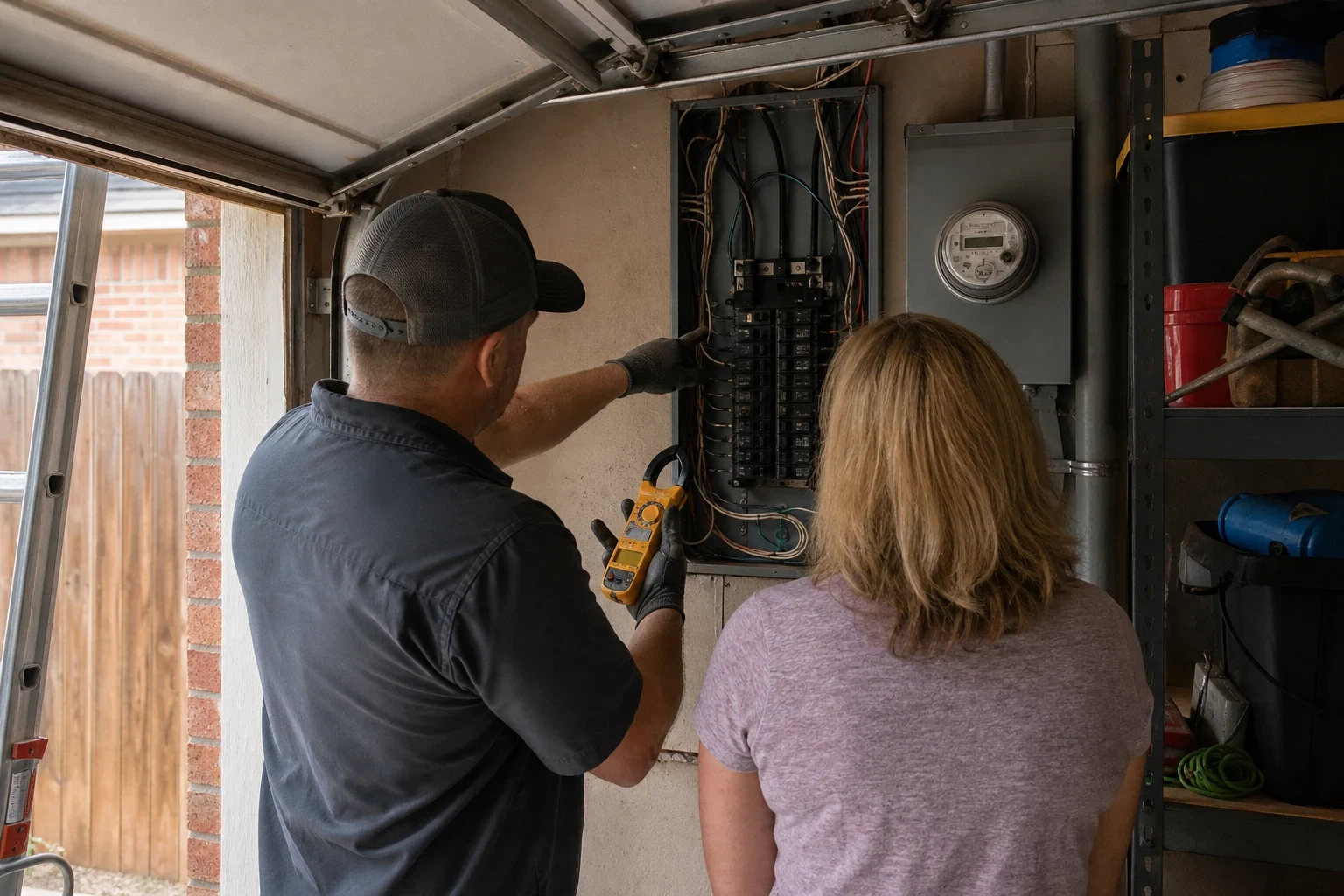
Older homes add a step. Before we tie anything in, we open the panel and look at what decades of past work left behind: double-tapped breakers, aluminum branch circuits, ungrounded runs, or a panel with no spare spaces. Finding those first keeps the install from becoming the weak link in an outage.
What Our Generator Installation Includes
- Starting and running loads
- We list each appliance you want backed up and note two numbers: its steady draw and the surge it pulls when a motor kicks on. AC compressors and well pumps have the biggest surges. Those totals settle whether you need a whole-house unit or a smaller one serving essential circuits.
- Transfer switch installation
- An automatic transfer switch for standby units, or a manual interlock and inlet for portables. Either way, your home cannot connect to the utility and the generator at the same time.
- Panel and service evaluation
- We check bus condition, breaker brand, available spaces and grounding. If the panel can't safely accept the transfer equipment, we explain why and what our panel upgrades work would involve.
- Pad placement and wiring runs
- We place the unit to meet manufacturer clearances from windows, doors and vents, then run conductors in conduit sized for the generator's output and the distance to the switch.
- Startup and testing
- We fire the unit, simulate a utility loss, confirm transfer and retransfer, and walk you through the controls and exercise schedule.
Signs a Generator Is Worth Adding
Outages that cost you
Losing a refrigerator full of food, a sump or well pump, or medical equipment during a long outage is the clearest case for backup power.
Extension cords through a window
Running a portable generator with cords into the house is risky and limits what you can power. An inlet and interlock lets the same generator feed your panel safely.
Summer heat or winter ice
North Texas outages tend to come with triple-digit afternoons or freezing nights, when losing AC or heat matters most.
Remote work or power-dependent care
Steady backup power keeps equipment running without anyone dragging a portable out in the rain.
An older panel you've been meaning to address
If your panel is already near capacity or showing its age, planning the generator and the panel together usually means one permit and one round of wall and panel work.
How a Generator Install Runs
- 1
Service visit and site check
We look at your panel, meter location, wiring condition and where the unit can legally sit. We also note the fuel connection the unit will need so you know what that side involves.
- 2
Sizing and written scope
Based on the load calculation, we lay out the generator size, transfer switch type, which circuits are covered and any panel corrections needed, in writing before work starts.
- 3
Permit and installation
We pull the electrical permit, mount the transfer switch, run conduit and conductors, and terminate everything in the panel. Your home loses power only while we work inside the panel, and we schedule that window with you in advance.
- 4
Inspection and full transfer test
Once the inspector signs off, we cut utility power on purpose, let the system pick up the load, then restore it and watch the switch hand back. You see exactly what will happen in a real outage.
What Moves the Cost of a Generator Install
Generator jobs vary more than most electrical work, because the unit, the switch and the condition of your existing panel all change the scope. We give you a written breakdown after the service visit so you can see where the money goes.
- Generator size and type
- A portable hookup with an interlock is a much smaller job than a whole-house standby unit with an automatic transfer switch.
- Panel condition
- A panel with open spaces and solid bus bars accepts transfer equipment easily. An obsolete or full panel may need replacement or a subpanel first.
- Distance and routing
- Longer runs from the pad to the transfer switch need larger conductors and more conduit, and routing through finished walls or under slabs adds labor.
- Permits and corrections
- Permit requirements vary by jurisdiction, and old code issues we find in the panel may need correcting before inspection will pass.
Generator Installation Questions
Something not covered here? (682) 204-9915
Is it safe to feed my house with a cord from a portable generator into a wall receptacle?
That setup sends power backward through your panel with nothing stopping it from reaching the street. It can energize utility lines a crew believes are dead, and it can wreck the generator when grid power comes back. An inlet box on the outside wall plus an interlock plate on your panel lets you run the same generator through your breakers, with the main forced off first.
What size generator does my home need?
It depends on what you want powered, not the square footage. A central AC compressor or well pump has a starting surge several times its running draw. We calculate those loads during the service visit and recommend a size that covers them without paying for capacity you won't use.
Will my older panel work with a generator?
Often yes, but not always. Panels with damaged bus bars, discontinued breaker brands or no free spaces may not accept a transfer switch or interlock safely. We check before quoting so the panel question doesn't surprise you mid-job.
Who does the electrical work on a generator install?
Our electricians are licensed and insured. The work is carried out under a Master Electrical License, and our contractor number is TECL 36609. We pull the permit for your generator install and schedule the inspection.
Do you handle the gas line?
Our scope is the electrical side: the transfer switch, wiring, panel work and startup. We tell you the fuel connection and capacity the unit needs so the gas or propane side can be planned alongside our work.
What about maintenance after install?
Standby units need regular exercise cycles, oil changes and battery checks. Our generator service and repair page covers that work, and if you'd rather skip fuel entirely, home battery backup systems are another option we install.
Plan Your Backup Power Before the Next Outage
We'll check your panel, run the load numbers and lay out the right generator and transfer switch for your home in writing.