ServicesTorque & Cleans
Panel Torque & Clean Service in Benbrook
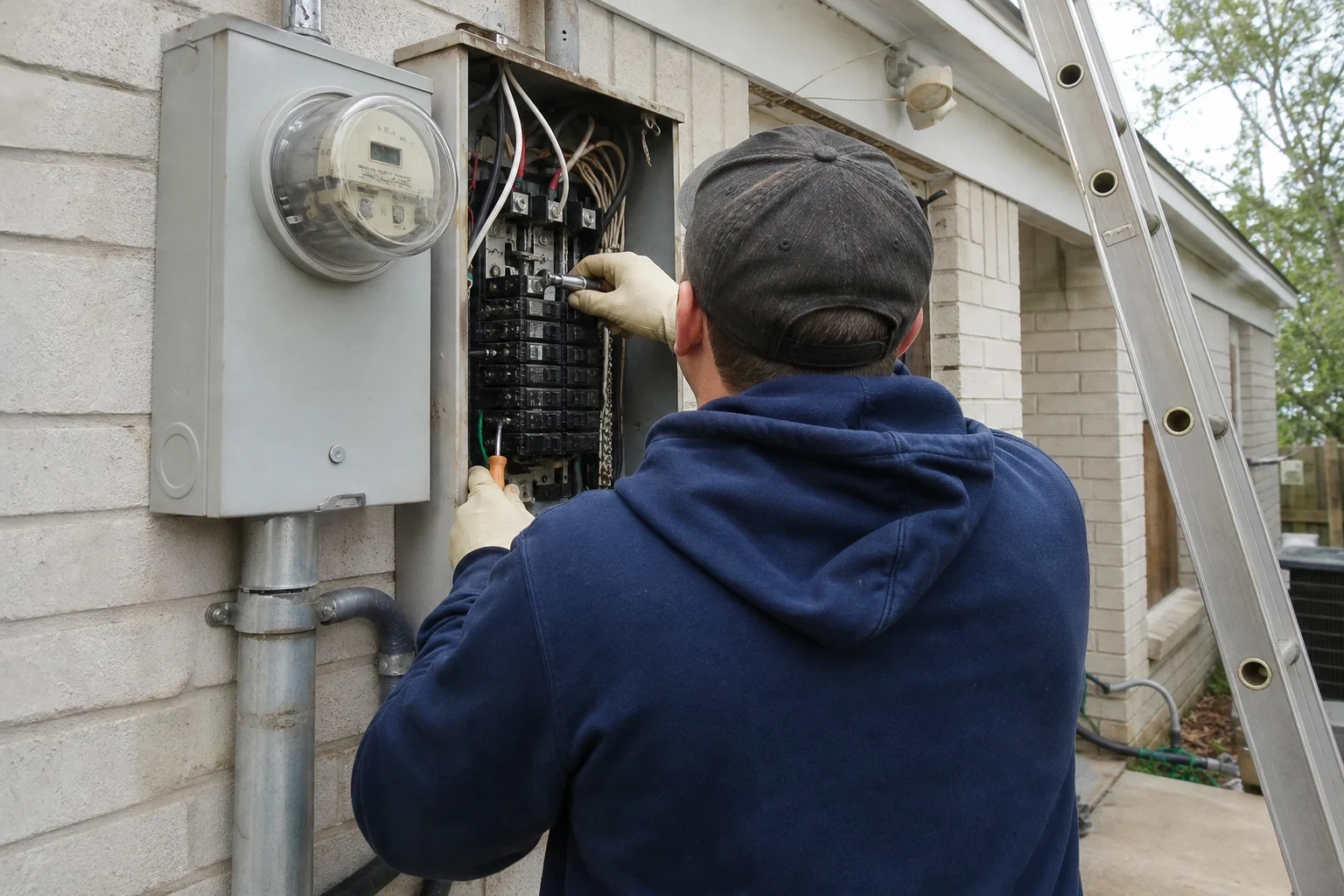
A torque and clean is scheduled maintenance for your electrical panel. We shut it down, tighten every lug and breaker terminal to the manufacturer's value, clear out dust and corrosion, and look for heat damage left by loose connections or past repairs. You get a written rundown with photos.
Why Panel Connections Work Loose Over Time
Every screw terminal in your panel holds a conductor under clamping pressure. Each time a load comes on, the copper or aluminum warms and expands, then shrinks again as it cools. Thousands of those cycles slowly relax the pressure. Aluminum also creeps under load, so a lug that was tight on install day can be measurably loose years later.
A loose connection adds resistance, and resistance makes heat. That heat darkens the insulation, oxidizes the metal and loosens the joint further. Left alone, it ends in a breaker that trips for no clear reason, a scorched bus stab or arcing inside the enclosure. Long months of air conditioning load in Benbrook summers put a lot of those cycles on the main and AC breaker terminals.
Older panels carry extra history. Decades of cycles, a breaker added by a previous owner, a neutral doubled under one screw or aluminum feeders without antioxidant compound all show up during a torque and clean. We find them while the fix is still small.
What a Torque and Clean Covers
Infrared check under load
Before we shut anything off, we scan the panel with a thermal camera while your home is drawing power. A hot lug or breaker shows up clearly, which tells us where to look closest once the panel is dead.
Torque to the listed value
We tighten the main lugs where they can be safely de-energized, the neutral and ground bars, and every breaker terminal using a calibrated torque tool set to the manufacturer's label values. Guessing by feel can strip a terminal or leave it loose, so we do not guess.
Cleaning the enclosure
Dust, insect nests and debris collect on the bus and hold heat and moisture. We remove them with nonconductive brushes and vacuum, never a damp rag or spray inside a live-rated enclosure.
Breaker and bus stab inspection
We check that each breaker sits firmly on its bus stab and look for pitting, discoloration or melted plastic. A breaker that rocks on the bus can arc where you cannot see it.
Aluminum conductor care
Where aluminum feeders or branch wiring land in the panel, we clean the conductor and apply antioxidant compound where the terminal calls for it, then retorque.
Written findings with photos
You get notes and photos of each problem we found, what we corrected on the spot and anything that needs a separate repair.
Signs Your Panel Is Due for a Torque and Clean
A warm cover or breaker
A panel cover that feels warm to the back of your hand, or one breaker noticeably hotter than its neighbors, points to a high-resistance connection.
Buzzing or crackling
A faint sizzle from the panel usually means current is jumping a small gap at a loose terminal or a poorly seated breaker.
Lights dip when the AC starts
Some dimming at compressor startup is normal. A deep or lingering dip can mean a loose main lug or neutral connection.
Discoloration or a burnt smell
Brown or black marks on a breaker, wire insulation or the bus are heat damage. Book a visit and keep that circuit off until it is checked.
An older panel nobody has opened
If you bought the house and have no record of panel service, a torque and clean is a sensible baseline before you add new loads.
How the Visit Runs
- 1
Book by phone
On the call, describe where the panel sits, roughly how old it is, whether there are subpanels and any warmth, buzzing or tripping you have seen. We pick a time together, and we warn you up front that the power goes off for part of the visit.
- 2
Under-load scan and visual check
With the house running normally, we remove the dead front, take thermal images and note double taps, mismatched breakers and signs of past repairs.
- 3
Shutdown, torque and clean
We turn off the main, verify the bus is dead with a meter, then clean and torque every termination. The electricians doing this work are licensed and insured, and the company operates under a Master Electrical License with electrical contractor number TECL 36609.
- 4
Restore power and review
We reinstall the cover, bring circuits back one at a time and walk you through the photos. Anything beyond tightening and cleaning gets a separate written price before we touch it.
What Affects the Price
This job is mostly labor, and the hours depend on how your system is laid out and what we find behind the dead front. Tell us about your panels on the phone and we give you the price before the visit. If a repair turns up beyond tightening and cleaning, it gets its own price and the choice stays yours.
- Number of panels
- A main panel alone is quicker than a main plus a garage or workshop subpanel, each of which gets the same scan, torque and clean.
- Main lug access
- Line-side lugs stay energized with the main breaker off. Fully de-energizing them can mean coordinating a meter pull with the utility, which adds scheduling and time.
- Condition inside
- Heavy corrosion, aluminum conductors needing compound or a damaged breaker takes longer than a clean panel that only needs retightening.
- Location and clearance
- An exterior panel with open access is faster than one behind shelving, in a tight closet or inside a finished wall.
Torque and Clean Questions
Something not covered here? (682) 204-9915
How long will my power be off?
The scan happens with power on. The shutdown portion is usually a couple of hours for a typical single panel, longer with subpanels or a utility meter pull. We tell you the expected window when you book so you can plan around refrigerators and medical equipment.
How often should this be done?
There is no single rule for houses. A panel that has never been serviced should get a baseline check, and after that we suggest a schedule based on what we found, such as aluminum conductors or signs of heat.
Is it worth doing if nothing seems wrong?
Loose connections often heat up quietly long before a breaker trips or you smell anything. The thermal scan and torque check catch that stage, when the fix is tightening a screw instead of replacing a bus or breaker.
What if you find an outdated or failing panel?
We show you the photos and explain what we saw and why it matters. If the panel or bus is damaged past a simple repair, we price a replacement as a separate job, covered on our Panel Upgrades page, rather than tightening parts that should not stay in service.
Can you fix a double-tapped breaker during the visit?
Often, yes. Two wires under a terminal not rated for them can be corrected with a pigtail or a proper breaker, and we will explain the fix and its cost before we make it. Larger past-repair problems may fall under Code Corrections & Inspection Fixes.
Get Your Panel Checked Before It Heats Up
Give us a rundown of your panel and any subpanels, and we will set up a time for the scan, torque and clean. You will see every finding in photos before you decide on anything extra.