ServicesWhole-Home Rewiring
Whole-Home Rewiring in Benbrook
We replace the original branch wiring in older houses with new grounded copper circuits. That means fewer warm outlets, no more two-prong receptacles and a system that can carry what your home actually uses now. We plan the route so walls stay mostly intact.
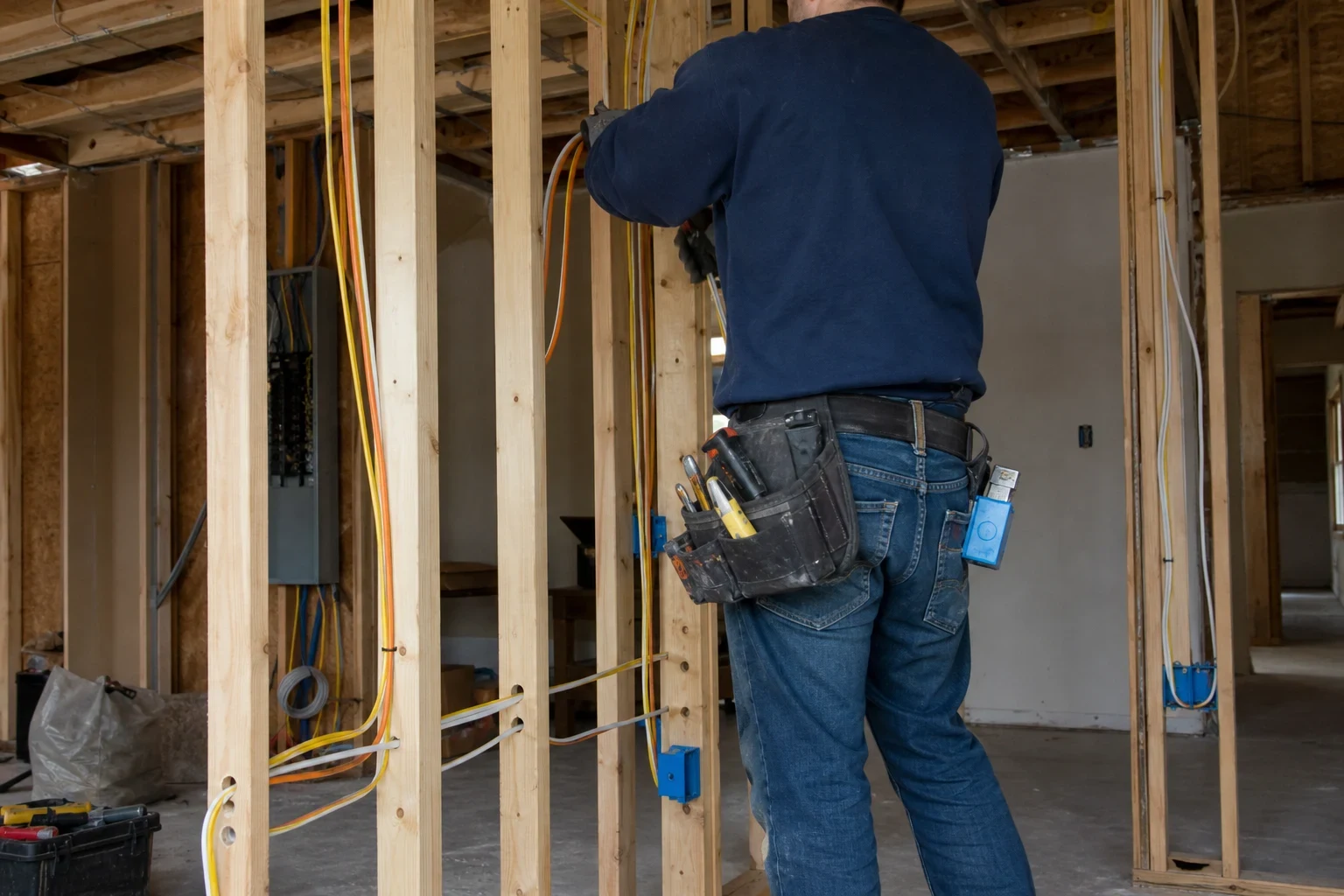
When rewiring is the right answer, and when it isn't
Wire doesn't fail all at once. Rubber and cloth insulation from the 1950s and early 1960s turns brittle and cracks where it's been flexed at boxes. Ungrounded two-wire cable gives a surge protector or a computer power supply nowhere to send fault current. Aluminum branch wiring from the mid-1960s to mid-1970s expands and contracts at every screw terminal, loosening a little each cycle until a connection runs hot.
Not every older house needs a full rewire. Sometimes the cable itself is sound and the trouble sits in a few bad splices from past repairs or one overloaded kitchen circuit. We open boxes, test insulation and look at what's in the attic before we recommend anything. If targeted electrical repair or a few new circuits will do the job, that's what we'll tell you.
Every rewire we take on is carried out under a Master Electrical License, and our electrical contractor registration is TECL 36609.
What a whole-home rewire includes
New copper branch circuits
We run new grounded NM-B copper cable sized to each circuit's load: 12-gauge on 20-amp kitchen and bath circuits, 14-gauge where 15 amps is right. Old cable is disconnected and abandoned in place or pulled where it's accessible.
New boxes, devices and covers
Receptacles and switches are replaced with new grounded devices. Undersized or overfilled boxes get swapped so conductors aren't crammed against terminals.
AFCI and GFCI protection
Circuits get arc-fault and ground-fault protection where current code calls for it. That covers bedrooms and living areas, kitchens, baths, laundry, garages and exterior outlets.
Panel review and tie-in
New circuits land in the panel on properly sized breakers. If the existing panel is undersized or a brand with a poor track record, we'll explain why a panel upgrade belongs in the same project.
Permit and inspection
The permit is ours to pull. An inspector looks over the new cable while the walls are still open, then returns for a last look once devices are in, following whatever your local jurisdiction calls for.
Signs your wiring has reached the end
Two-prong outlets throughout
This usually means the house was built without an equipment ground. Swapping in three-prong receptacles without a ground path hides the problem instead of fixing it.
Crumbling insulation at boxes
If the jacket on wires behind a switch plate flakes when touched, the copper underneath is close to bare. That gets worse every time someone works in the box.
Warm plates or a faint burning smell
Heat at a cover plate points to a loose or oxidized connection. On aluminum circuits it's a common early warning.
Lights that dim when appliances start
Voltage drop on long, undersized runs shows up as flicker when the AC compressor or a microwave kicks on. It also means the wire is running warmer than it should.
A patchwork of past repairs
Mixed wire types, splices buried in walls and extension-cord fixes tell us the system has been stretched for decades. At some point new circuits cost less than chasing each fault.
How a rewiring job runs
- 1
Assessment visit
We open a sample of boxes, check the panel and look at the attic and crawl space or slab routing. You get a written scope that lists each circuit and where the new wire will run.
- 2
Planning the route
In attics we can fish most runs down interior walls with small access cuts. We schedule the house in sections so you keep power to the kitchen and at least one bath each night.
- 3
Rough-in and inspection
New cable, boxes and the panel tie-in go in, then the inspector checks the work before anything is closed up. Since Texas attics run extremely hot in summer, we plan attic work for the cooler morning hours.
- 4
Devices, testing and cleanup
We install devices, test every circuit for polarity, ground and GFCI/AFCI trip, and label the panel. Access holes are patched; final texture and paint are listed in the scope so nothing is a surprise.
What moves the price of a rewire
A rewire is priced by circuit and by how hard it is to reach each run, not just by square footage. Your written estimate breaks those pieces out line by line. We don't quote a number until we've opened boxes and seen the attic.
- Number of circuits and devices
- More rooms, more receptacles and more dedicated appliance circuits mean more cable and more labor.
- Attic and wall access
- Open attic space over a single-story house makes fishing wire straightforward. Low-pitch roofs, plaster walls or finished ceilings with no access take more time and more cuts.
- Panel condition
- If the panel can't take the new circuits safely, replacing it adds to the scope but is often done in the same permit.
- Wall repair scope
- Patching access holes is part of the job. Texture matching and paint are priced separately so you can choose who handles them.
Rewiring questions we hear
Something not covered here? (682) 204-9915
Do we have to move out while you rewire?
Usually not. We split the house into sections, and any section we've finished gets its power back before we pack up for the evening. Expect some rooms to be without outlets for a day or two at a time.
Can you just add grounds to my existing wiring?
Sometimes a single circuit can get a separate ground conductor, and code allows GFCI protection on ungrounded outlets as a fix. If the insulation is breaking down, though, adding a ground doesn't solve the bigger risk. We'll show you what we find in the boxes before you decide.
My house has aluminum wiring. Does it all need to come out?
Not always. Approved repair connectors at every termination are one option, full replacement is the other. The choice depends on the condition of the wire and how many connections show heat damage.
Who actually does the wiring in my house?
Our licensed and insured electricians do the work themselves. The permit is filed under our contractor registration, and the inspector signs off on the rough-in before any wall is closed.
How long does a full rewire take?
A typical single-story house takes several working days of wiring plus inspection scheduling. Two-story homes and plaster walls add time. Your written scope includes the expected schedule.
Find out what's behind your walls
We'll open boxes, check the panel and give you a written scope that separates must-fix wiring from what can wait. From there, you decide.