ServicesGenerator Service & Repair
Generator Service & Repair in Benbrook
We test and repair standby generators so they start, carry your home and hand power back cleanly. That covers the battery, transfer switch, controller codes and the wiring that connects the unit to your panel, where older houses often hide the real problem.
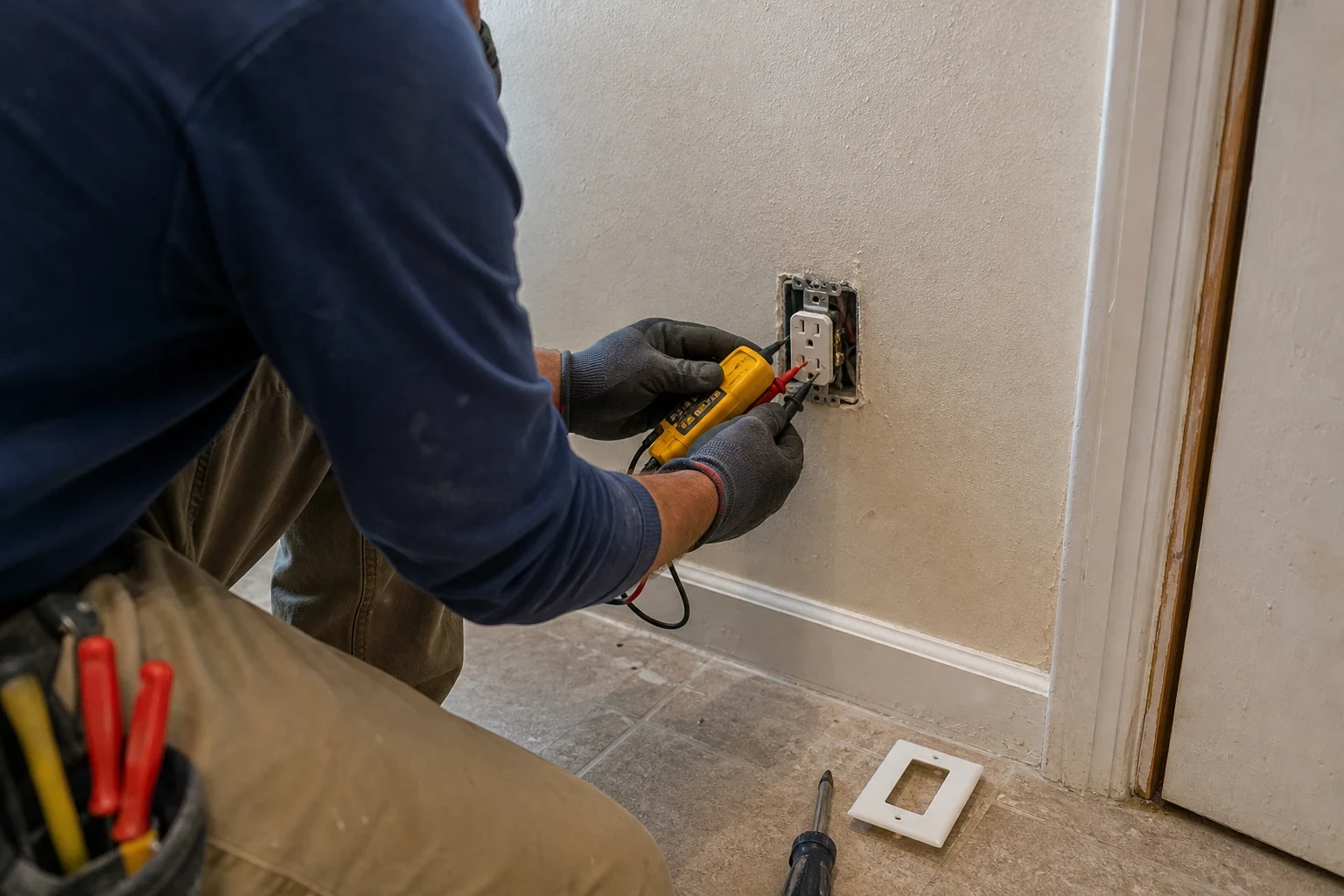
Why Generators Fail When You Finally Need Them
A standby generator sits idle for months, then has to start on its own and pick up your home in seconds. Most failures we find aren't inside the engine. They're a weak starting battery, a corroded terminal, pitted transfer switch contacts, or a controller fault code nobody cleared after the last outage.
Older houses add another layer. Many generators were tied into a panel that was already full, or connected through an inlet and interlock added years after the house was built. We check how the generator meets your home's wiring, not just whether the engine turns over. A unit that runs fine can still overload a branch circuit, switch through a loose neutral, or feed power somewhere it shouldn't.
Our electricians are licensed and insured, and every generator repair runs under our Master Electrical License and our electrical contractor number, TECL 36609.
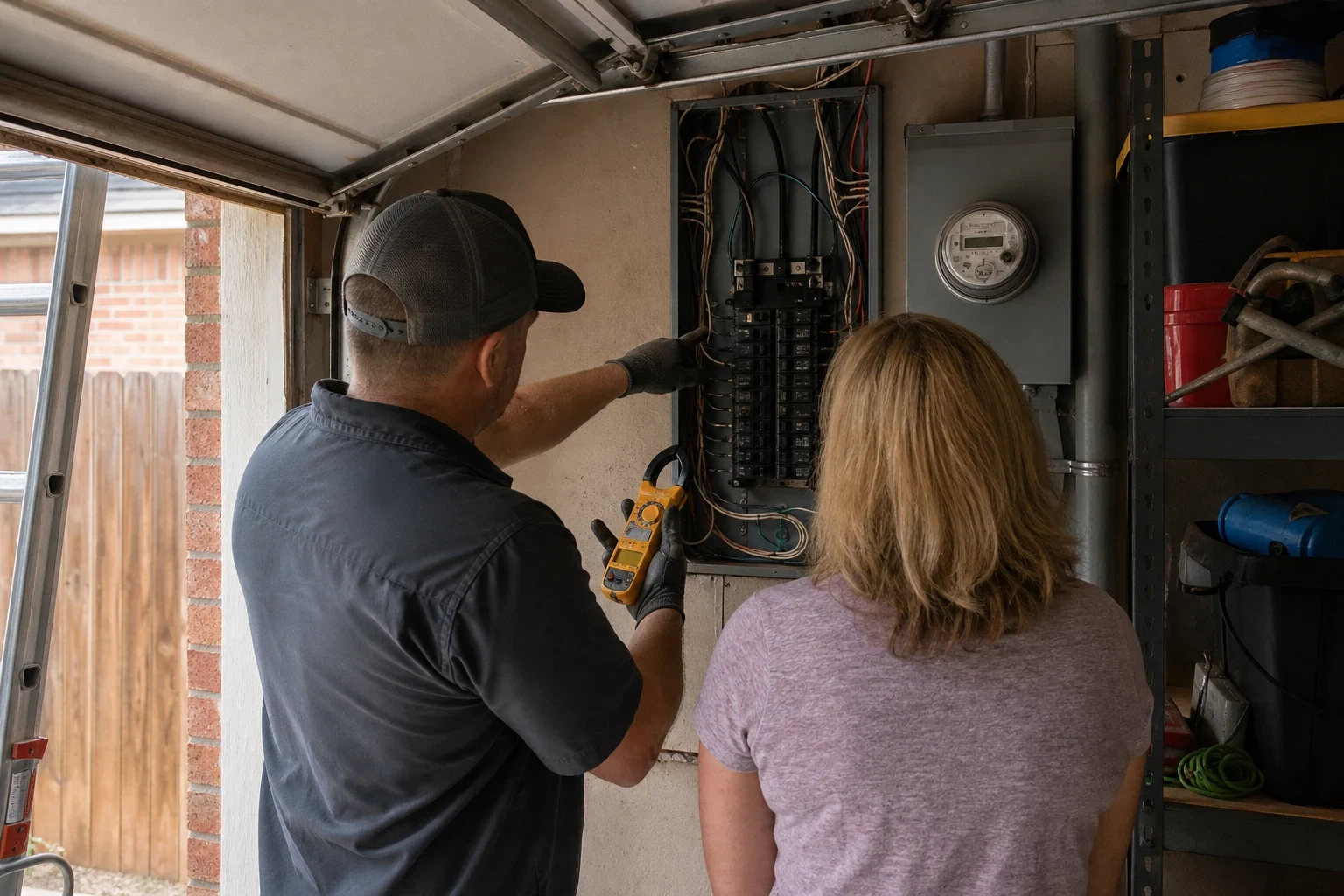
Parts of the System We Test and Service
- 01
Starting battery and charger
The starting battery gets checked under a cranking-level draw, and we measure what the float charger is actually putting out. Any corrosion on the terminals gets cleaned off. Summer heat wears batteries down fast, so one that cranked well in spring can be too weak by fall.
- 02
Automatic transfer switch check
We inspect the contacts, solenoid and terminations, then simulate an outage to watch the transfer and retransfer timing. Pitted or burned contacts get documented with photos.
- 03
Engine maintenance items
Oil and filter, spark plugs and air filter on the manufacturer's schedule. We also look for oil seepage and check the fuel connection for leaks.
- 04
Controller history and settings
We read the fault log for overcrank, low oil pressure, overspeed and similar codes, clear what's resolved, and confirm the weekly exercise cycle is set and running.
- 05
Load test with your real loads
With the generator carrying your home, we measure voltage and frequency at the panel and watch for sag when the air conditioner compressor kicks on. That tells us whether the unit is sized right for what it's being asked to run.
- 06
The connection to your panel
We check the generator breaker, conductor size and termination torque, including aluminum feeders, which loosen over time if they weren't torqued and treated correctly.
Questions about Generator Service & Repair?
Call(682) 204-9915Signs Your Generator Needs Service
It skips or fails its exercise run
If the weekly test doesn't start, or starts and shuts down, the battery, fuel supply or a sensor is usually the cause. It will fail the same way in a real outage.
A warning light or code on the controller
Yellow and red indicators mean the unit logged a fault. Some clear on their own, but repeated low oil pressure or overcrank codes point to a part that needs attention.
Lights flicker on generator power
Dimming or pulsing usually means the frequency is drifting or the unit is overloaded. Electronics and motors don't like either.
The house stays dark while the engine runs
When the generator is running but nothing gets power, the transfer switch or its control wiring is the first place we look.
No service record since you moved in
If the previous owner left no paperwork, assume the oil, battery and filters are overdue and the settings were never checked.
A portable plugged into a dryer outlet
A double-ended cord can push power back onto the utility line and energize wiring you think is dead. We replace that setup with a proper inlet and interlock or a transfer switch.
How a Generator Service Visit Runs
- 1
The booking call
Tell us the brand, model and size if you know them, plus any codes or symptoms. We schedule a visit and let you know what we'll need access to, usually the generator, the transfer switch and your main panel.
- 2
Testing before any repair
We read the controller history, test the battery, then open the utility disconnect to simulate an outage. Measurements at the panel show how the whole system behaves, not just the engine.
- 3
Findings and a written price
We show you what we found with photos and readings, explain whether a part can be repaired or should be replaced, and give you the price before we start.
- 4
Repair and a full retest
After the repair we run a complete transfer and retransfer cycle, reset the exercise schedule and leave notes on what to watch between visits.
What Moves the Cost of Generator Repair
A routine service visit and a failed control board are very different jobs, so we price after testing, not before. You see the findings and the price first, and nothing gets replaced without your go-ahead.
- Generator type and size
- Air-cooled home units take less time to service than larger liquid-cooled models, which have coolant, belts and more parts to check.
- Which part failed
- A battery or spark plugs are quick. A controller board, voltage regulator or transfer switch costs more in parts and labor.
- Parts for older units
- Discontinued models can mean sourcing compatible parts or weighing repair against replacement. We'll tell you plainly when an old unit isn't worth another repair.
- The condition of the hookup
- If the panel connection, interlock or transfer switch wiring doesn't meet code, correcting it adds work, and a permit and inspection where the local jurisdiction requires one.
Generator Service Questions
Do you work on generators you didn't install?
Yes. We service most residential standby generators regardless of who put them in. If the original installation has problems, we'll show you what they are and what it takes to correct them.
How often does a standby generator need maintenance?
For most home units, plan on an annual visit, or earlier if the owner's manual calls for service at a set number of run hours. A long outage is another reason to have it looked at, because several days of continuous running eats into the oil's useful life.
The engine runs but my house has no power. What's wrong?
Usually the transfer switch. Burned contacts, a failed solenoid or a broken control wire can stop it from moving to generator power even though the engine is fine. We test the switch and its wiring to find which one it is.
Is it okay to run my portable generator through a dryer outlet?
No. Without an interlock or transfer switch, that connection can send power back onto the utility line and into the panel's other circuits, which is a shock and fire risk. We can install an inlet with an interlock kit that fits your panel so the main breaker and generator breaker can't be on at the same time.
Do generator repairs need a permit?
Routine maintenance doesn't. Changes to the transfer switch, panel connection or wiring may need a permit and inspection, as required by the local jurisdiction. When one is needed, we pull it and meet the inspector.
Get Your Generator Tested Before the Next Outage
We'll check the battery, transfer switch and the connection to your panel, then show you what we found before any repair. We work in Benbrook and nearby towns including Aledo, Crowley and Fort Worth.