ServicesSurge Protection
Whole-Home Surge Protection in Benbrook
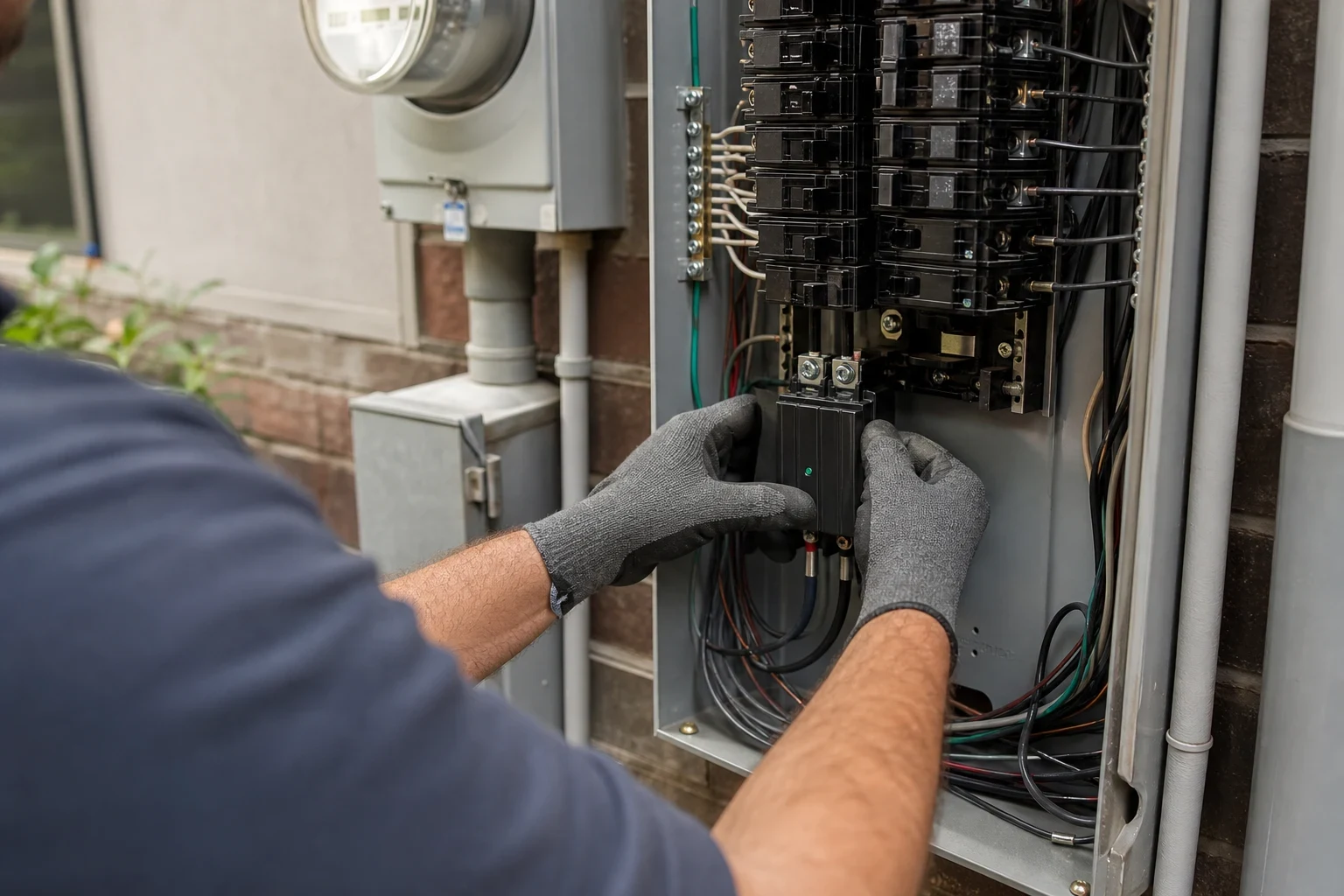
Our electricians mount a surge protective device at your main panel, then test the grounding and bonding it depends on. In older houses, a corroded rod or a missing water-pipe bond is often the weak link, so correcting that is part of the job, not an afterthought.
What a Surge Protector Does, and What It Needs to Work
A whole-home surge protective device, or SPD, mounts at or inside your main panel. When voltage spikes from a lightning strike nearby, utility switching or a large motor cycling on, the SPD diverts that excess energy to ground in a few billionths of a second. Plug-in strips still help at the TV or computer, but they cannot stop a spike that enters through the service and runs through every circuit, including the ones feeding your HVAC control board, range and garage door opener.
The catch is that an SPD only sends energy where your grounding system lets it go. A corroded ground rod, a cut bond to the water pipe or a cable TV line grounded somewhere else leaves the surge with no clean path. In older homes we often find all three, left over from past repairs and additions. So we check the ground before we install the device.
What the Work Includes
- 01
Panel-mounted SPD
We install a Type 2 device on a dedicated breaker or a Type 1 device on the line side where the panel and service allow. We choose by the surge current rating and voltage protection rating, not just a big joule number on the box.
- 02
Grounding electrode check
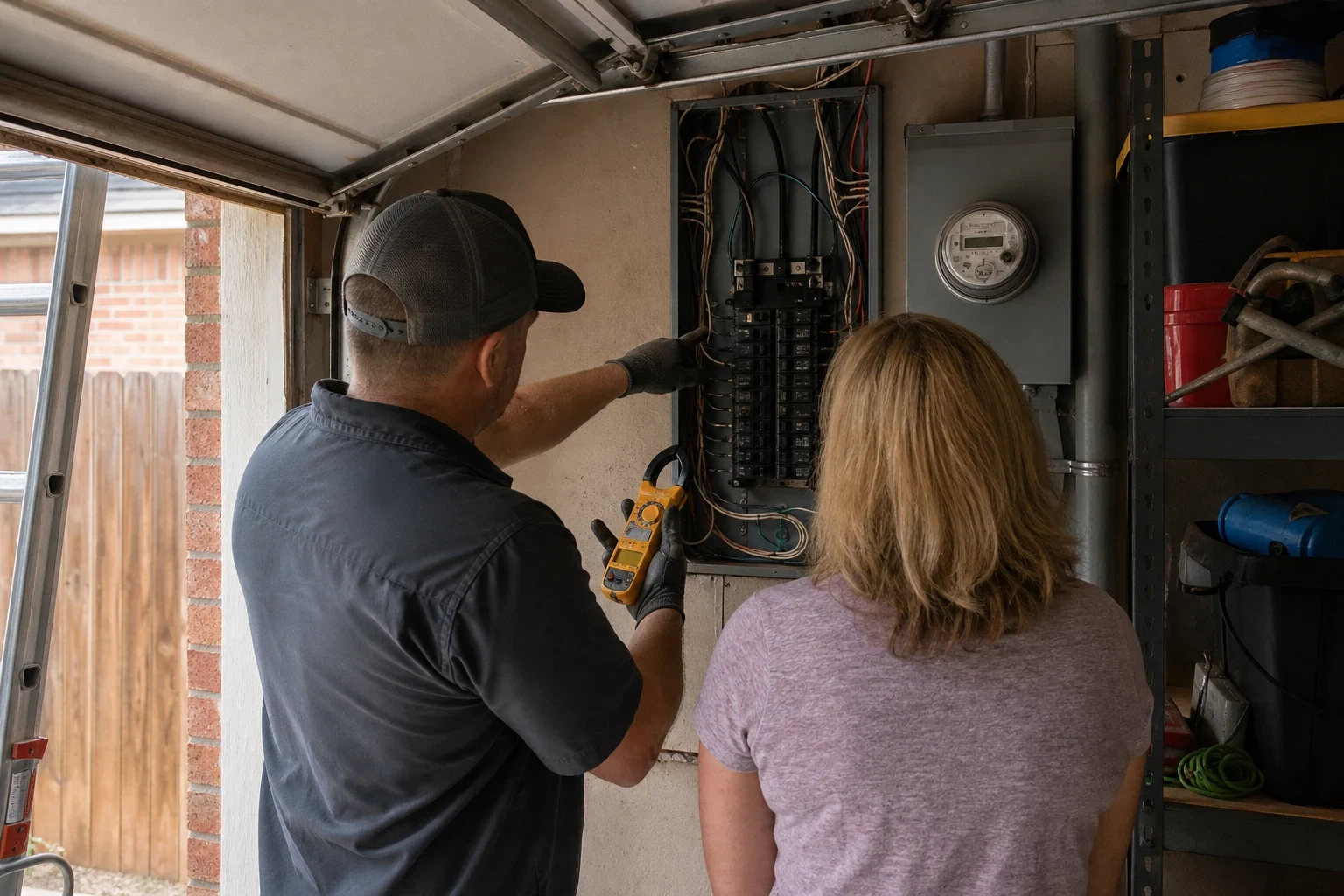
We locate the ground rod, inspect the clamp and conductor for corrosion or damage, and confirm the connection back to the panel. If the rod is missing or the conductor has been cut, we tell you before anything else goes in.
- 03
Bonding of water, gas and low-voltage lines
Metal water piping, gas piping and the bonding jumpers need to tie back to the same grounding system. We also look at where your cable, satellite and phone lines are grounded, because a separate ground point lets a surge jump between systems.
- 04
Short leads, tight connections
An SPD works best with short, straight leads to the bus. Every extra foot of wire adds resistance that lets more voltage through, so we mount it as close to the breaker as the panel allows and torque each lug to spec.
- 05
Point-of-use advice
For sensitive gear like home offices or entertainment setups, we explain where a quality plug-in protector adds a second layer behind the panel device.
Questions about Surge Protection?
Call(682) 204-9915Signs Your Home Could Use Surge Protection
Electronics failing early
Repeated failures of chargers, routers, LED drivers or appliance control boards often point to small, frequent surges. Each one wears down the components a bit more.
Lights flicker when the AC kicks on
Large compressors and pumps create internal surges every time they start. If you see a dip or flash, those spikes are moving through your wiring daily.
Two-prong outlets or an old panel
Ungrounded receptacles and older panels with no room for an SPD breaker usually mean the grounding system was never brought up to date. Surge protection on that setup needs groundwork first.
Damage after a storm
North Texas spring thunderstorms bring frequent lightning. If a strike nearby took out a TV, garage opener or HVAC board, the next one can too.
An SPD indicator that has gone dark
Surge devices wear out as they absorb hits. A failed status light means the device is no longer protecting anything and should be replaced.
How a Surge Protection Visit Runs
- 1
Look at the panel and service
We open the panel, note its make, condition and open breaker spaces, and check for signs of past repairs like doubled-up neutrals or mismatched breakers. Some older panels cannot accept an SPD breaker, and we say so plainly.
- 2
Test the ground and bonding
We trace the grounding electrode conductor, check bonds at the water and gas lines, and confirm where communication lines are grounded. You see what we find before we price the work.
- 3
Install the device
With power shut off at the main, we mount the SPD, land the leads short and tight, and correct any grounding or bonding faults you have approved. Most homes are without power for only a short part of the visit.
- 4
Verify and walk you through it
We restore power, confirm the status indicator reads normal and show you where it is so you can check it after storms. Any permit and inspection required by the local jurisdiction is handled as part of the job.
What Moves the Cost
The device itself is only part of the price. What your grounding system and panel need before the SPD can do its job usually decides the total. We go over each piece with you before work starts.
- Panel type and space
- A panel with an open two-pole slot takes a breaker-fed SPD easily. A full or obsolete panel may need a separate enclosure, or point toward a panel upgrade.
- Condition of the ground
- Replacing a corroded rod, adding a second electrode or running a new grounding conductor adds labor and material. A sound system adds nothing.
- Bonding corrections
- Missing water or gas bonds, or cable and phone lines grounded at a separate point, take extra time to correct and rebond.
- Device rating and location
- A Type 1 device on the line side, or protection added at a detached garage or subpanel, changes both the parts and the hours involved.
Surge Protection Questions
If lightning hits my house, will the panel device save my electronics?
Not from a bolt that lands on your roof or service mast. That much energy overwhelms any residential equipment. What the SPD is built for is the far more frequent surge that arrives from a strike down the street, a utility switching event or a compressor starting inside your home. Those everyday spikes are what slowly cook circuit boards, so stopping them is where the real value lies.
Do I still need plug-in surge strips?
For sensitive equipment, yes. The panel device knocks a surge down to a lower level, and a good plug-in protector at the TV or computer catches what remains. The two work together.
How often does a panel surge protector need replacing?
There is no fixed schedule. The metal oxide varistors inside wear a little every time they clamp a spike, so a unit in a home with frequent storms or heavy motor loads ages faster. That is the reason for the status light on the housing. Once it goes out, the unit has used up its capacity and should be swapped.
My house has old two-prong outlets. Can you still install one?
Usually, yes. The SPD connects at the panel, so it can protect the service even if the branch circuits are ungrounded. We will check the panel ground carefully and talk through options for the ungrounded outlets, which may fit with our electrical repair or whole-home rewiring work.
Who will be working in my panel?
The installation is done by our licensed and insured electricians. The business holds a Master Electrical License and contracts under TECL 36609, so the person opening your panel works under that credential.
Protect the Wiring You Already Have
We check your ground, install the right device and show you how to tell it is still working. We serve Benbrook along with Fort Worth, Aledo and White Settlement.