ServicesPanel Upgrades
Panel Upgrades in Benbrook, TX
We replace fuse boxes, problem breaker panels and undersized services with a panel sized for how your home uses power now. Before we price anything, we open the old panel, check the service entrance and grounding, and show you what earlier owners and past repairs left behind.
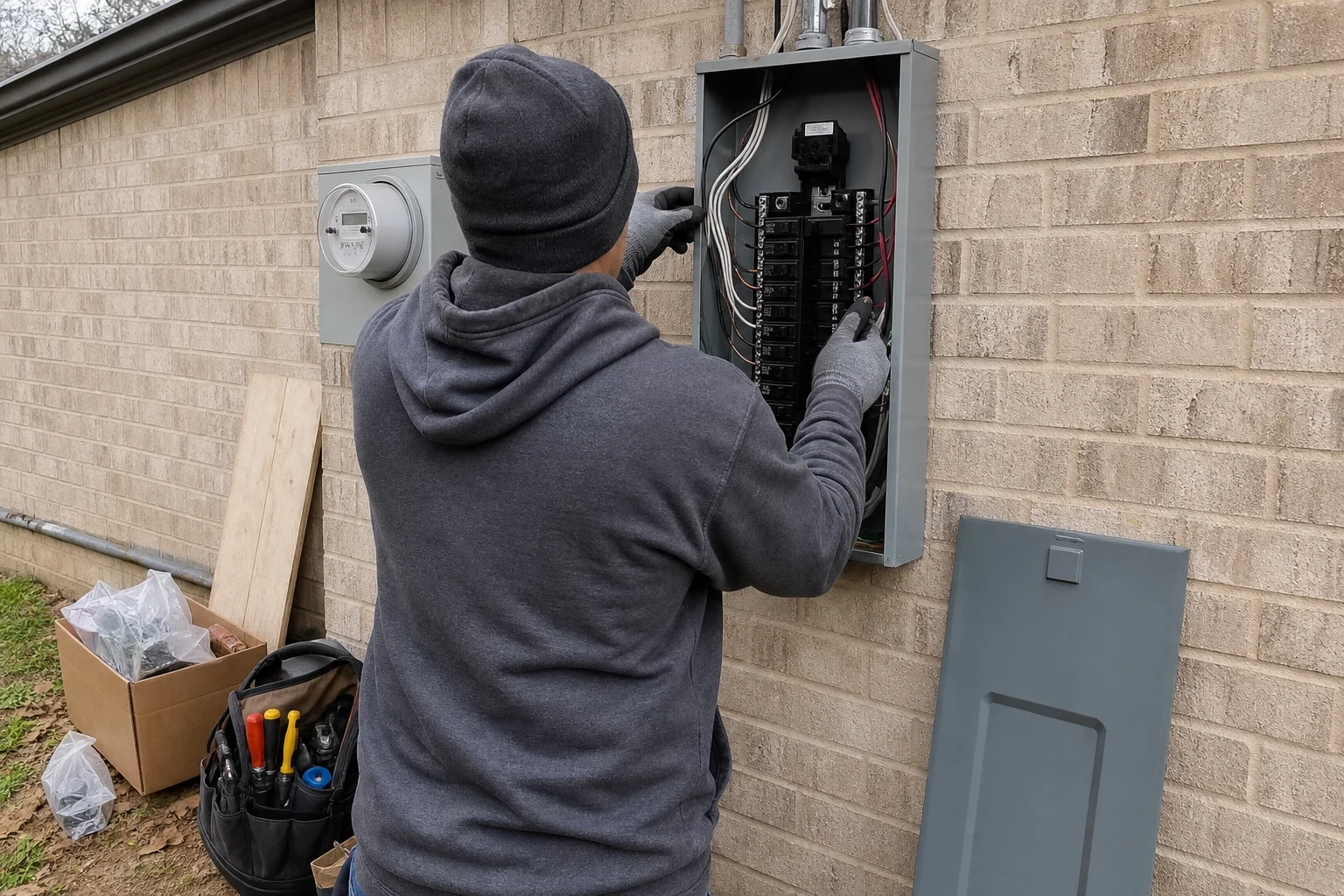
What a panel upgrade actually replaces
A panel upgrade is usually more than swapping the gray box on the wall. Depending on what we find, it can include a new main breaker and bus, larger service entrance conductors, a new meter base, and new grounding electrodes and bonding. Many houses built before the 1980s still run on 60- or 100-amp service sized for a range, a water heater and a few window units, not central air, an induction cooktop and an EV charger.
Older homes add a second layer. Panels from that era include Federal Pacific Stab-Lok and Zinsco, both with a documented history of breakers that fail to trip. We also find double-tapped breakers, scorched bus stabs, aluminum feeders with no antioxidant compound, and neutrals and grounds sharing a bar where they should be separated. We correct those as part of the job instead of moving the same problems into a new enclosure.
Panel work is regulated for good reason. We are a licensed electrical contractor, TECL 36609, the job is done under our Master Electrical License, and the electricians on your job carry insurance. If all you really need is one added circuit, a smaller fix may be the right answer, and we will tell you that.
What's included in the upgrade
Load calculation before sizing
We total your existing and planned loads, including HVAC, water heater, range, dryer and any EV charger or generator plans. That number sets the service size, so you don't pay for capacity you won't use or end up with a panel that is full on day one.
New panel and main breaker
A new enclosure, bus and main, with each branch circuit landed on its own correctly rated breaker. AFCI and GFCI protection goes in where current code requires it on the circuits we touch.
Service entrance and meter base
When the service size goes up, the service entrance conductors and often the meter base go with it. Old cloth-jacketed cable that has cracked from years of sun gets replaced, not reconnected.
Grounding and bonding corrections
We verify or drive ground rods, bond water and gas piping as required, and separate neutrals from grounds in any subpanel. A common find in older homes is a ground clamp on a metal pipe that was later cut over to PEX, which leaves it grounding nothing.
Torqued lugs and traced labels
Every lug is torqued to the manufacturer's spec, since loose terminations are a leading cause of heat damage in panels. Every breaker gets a legible label based on tracing the circuit, not guessing.
Permit, inspection and utility
We pull the permit, schedule the inspection the local jurisdiction requires and coordinate the disconnect and reconnect with the utility.
Signs your panel is due for replacement
Fuses or a problem brand
Screw-in fuses, Federal Pacific Stab-Lok or Zinsco breakers are reason enough to plan a replacement. The concern is a breaker that stays on during an overload.
Breakers trip under normal use
If the main or the AC breaker trips on a hot July afternoon when the compressor starts, the service may be undersized or a breaker may be worn out. We test to tell which.
Heat, buzzing or a burnt smell
A cover that is warm to the touch, a steady buzz or discolored plastic near a breaker points to a loose or arcing connection. Turn off that circuit and have it looked at soon.
No room left
A panel packed with tandem breakers and no open spaces can't take a new circuit for a remodel, a charger or a generator inlet without changes.
An inspector or insurer flagged it
Home inspections and insurance underwriters often call out older panel brands and fuse boxes. Our written findings give you something concrete to hand them.
How a panel upgrade runs
- 1
Assessment visit
We remove the dead front, check terminations, voltage and grounding, and run the load calculation. You get a written, line-item estimate and photos of anything we flagged.
- 2
Paperwork and a date
After you sign off on the estimate, our office submits the permit application. Your install date is matched to when the utility can cut and restore power at the meter.
- 3
Upgrade day
Expect the power to be off for most of the day, so plan for the refrigerator and any medical equipment. We cover the floor along our path, swap the panel and service equipment, and land and label each circuit.
- 4
Sign-off and handover
Once the inspection passes, the utility re-energizes the meter and your circuits come back on. Before we leave, we point out the main, go over the circuit labels with you and show how to reset a tripped breaker.
What sets the price of your panel job
Two houses with the same size panel can need very different amounts of work. The difference usually hides in the wall cavity, the service drop and the old wiring feeding the box. That is why we quote only after opening the panel, and your estimate breaks out each piece of the job on its own line.
- Service size change
- Keeping your current service size is the simpler job. Stepping up to 200 amps typically brings heavier service entrance conductors and a new meter base into the scope.
- Condition of existing wiring
- Brittle insulation, aluminum branch circuits or undersized feeders found at the panel may need repair before circuits can be reconnected safely.
- Panel location
- A panel in a closet, bathroom or without the required working clearance may need to move, which adds wire runs and wall repair.
- Added protection and circuits
- AFCI and GFCI breakers cost more than standard ones, and any new circuits you add at the same time increase the scope.
Questions we hear about panel work
Something not covered here? (682) 204-9915
How long will my power be off for a panel replacement?
For a simple swap at the same location, plan on one working day with the house dark for much of it. Moving the panel or replacing the service entrance adds time. When the inspection happens depends on the local jurisdiction, and we lay out the expected timeline for you before any work begins.
Do you pull the permit?
Yes. Panel and service work requires a permit and inspection, and we handle both as the local jurisdiction requires. We also coordinate with the utility for the disconnect and reconnect.
Is my Federal Pacific or Zinsco panel really a problem?
Both brands have breakers with a documented record of not tripping under overload, and replacement parts are hard to find. A panel can look fine and still fail the one time it matters. We recommend replacing them rather than repairing them.
Do I need 200 amps?
Not always. A smaller home with gas appliances may do fine with a properly sized 100- or 125-amp service. The load calculation decides it, and if you plan an EV charger or generator later, we factor that in now.
Will a new panel mean rewiring the whole house?
Usually not. Most existing circuits reconnect to the new panel. If we find failing wiring, we show you photos and price that repair separately, and point you to whole-home rewiring only when the condition calls for it.
Find out what's inside your panel
An assessment visit tells you whether your panel needs replacing, what size service fits your home and what the job includes. You decide from there.