ServicesLighting Installation
Lighting Installation in Benbrook, Matched to the Wiring Behind It
We install ceiling fixtures, recessed lights, fans, dimmers and outdoor lighting in your home, and we open the box before we hang anything. Older ceilings hide brittle wire, unrated boxes and past repairs, so we check what's there and fix what can't carry the new fixture.
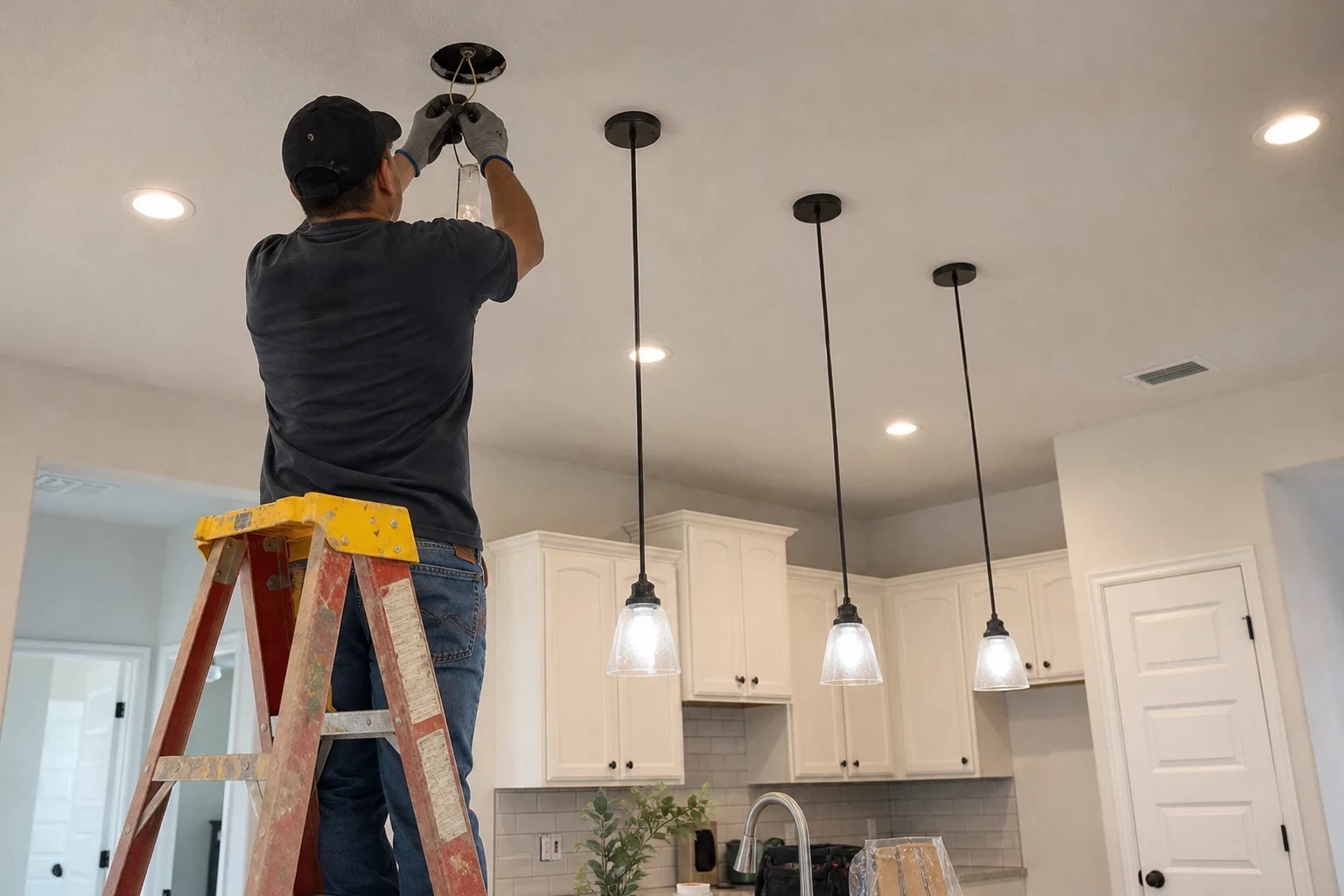
New Light, Old Ceiling Box
Most lighting jobs look simple from the floor. The trouble sits in the ceiling: a shallow pancake box never rated to hold a 40-pound fan, cloth-insulated wire baked stiff by decades of hot incandescent bulbs, or a splice someone tucked behind a fixture without a wire nut. Hang a new fixture on that and it may work for a while, then flicker, buzz or go dark.
Our electricians are licensed and insured, the work is done under a Master Electrical License, and the company is a licensed electrical contractor, TECL 36609. That matters for lighting because a new circuit, a relocated switch or an added outdoor run can require a permit, and we handle permits and inspections as the local jurisdiction requires.
If the wiring we find calls for more than a lighting job, we tell you plainly and lay out the options, from repairing a single run to whole-home rewiring.
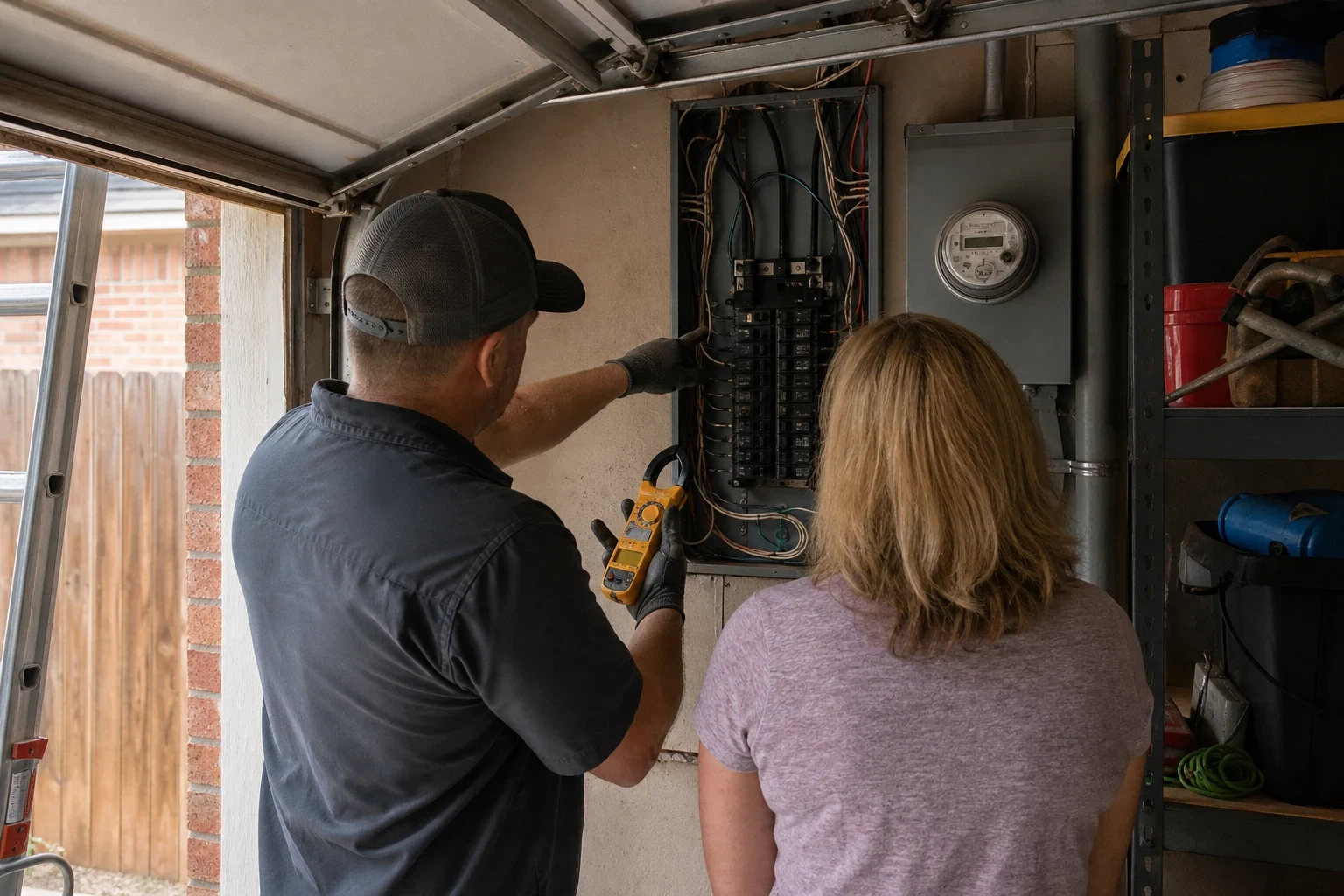
What Our Lighting Installation Covers
- 01
Ceiling fixtures and chandeliers
We replace or add fixtures and confirm the box is rated for the weight. Heavy chandeliers get mounted to framing or a listed brace. Every splice gets proper connectors, and the ground is tied in wherever one exists.
- 02
Recessed and wafer LED lights
Older cans that aren't IC-rated can't touch attic insulation without running hot. We use IC-rated housings or canless wafer lights, space them so the room lights evenly, and seal around them to limit attic air leaks.
- 03
Ceiling fans
A spinning fan tugs and shakes its mount for years, a load no fixed fixture puts on a box. We install a fan-rated box or a brace bar between the joists. For separate fan and light control, we look for a spare conductor in the switch leg before running new cable.
- 04
Dimmers and smart switches
Old leading-edge dimmers were built for incandescent bulbs and often make LEDs flicker or hum. We match the dimmer to the lamp, and we check the switch box for a neutral, which many smart switches need and many older switch loops lack.
- 05
Outdoor and landscape lighting
Porch lights, soffit floods, motion sensors and path lights, with weather-rated boxes, in-use covers and GFCI protection where required. Buried runs go in at proper depth in conduit or rated cable.
Questions about Lighting Installation?
Call(682) 204-9915Signs Your Lighting Needs Work or a Closer Look
LEDs that flicker or buzz
Usually a dimmer that doesn't match the lamp, sometimes a loose connection at the fixture or switch. A loose splice makes heat, so it's worth finding.
Brittle wire at an old fixture
If the insulation crumbles when you take down a fixture, years of bulb heat cooked it. We cut back to sound conductor or replace the run.
A wobbling fan or sagging fixture
That points to a box not rated for the weight, or one fastened only to drywall or plaster.
Rooms that stay dim
Many older bedrooms were wired with a switched outlet instead of a ceiling light. Overhead or recessed lighting fixes the dark corners.
Warm switch plates or scorch marks
Stop using that switch. Heat there means a connection is failing, and it needs electrical repair before any new lighting goes in.
How a Lighting Installation Day Runs
- 1
Talk it through by phone
Tell us the rooms, the fixtures you have or want, and anything odd you've noticed. We set a service visit time.
- 2
Open up and test first
We shut off the circuit, open the existing boxes and test. We check wire condition, box rating, grounding and what else shares the circuit, then show you what we found and go over the price before any work starts.
- 3
Install and correct
We mount, wire and secure each fixture, replacing boxes or damaged wire where needed. Drop cloths go under ladders, and openings for new lights are cut tight to the housing.
- 4
Test, clean up and inspect
Every light, dimmer and sensor is tested on the finished circuit. We clear packaging and dust, and if a permit was pulled, we schedule the inspection.
What Moves the Price of Lighting Work
Two identical fixtures can sit on very different wiring, so lighting jobs vary more than people expect. We go over the price item by item before work starts, so you can see what is fixture work and what is a correction to old wiring.
- Box and wire condition
- A sound, fixture-rated box is a quick swap. A pancake box, brittle cloth wire or a missing ground adds parts and time.
- New runs versus replacements
- Hanging a fixture where one already exists costs less than fishing new cable through finished walls, especially plaster or under a low roof.
- Attic access and season
- Recessed and new ceiling work usually means attic time. Deep insulation and tight framing slow things down, and Texas summer attic heat limits how long anyone can safely work up there, so we may schedule that part for the morning.
- Fixture type and count
- Heavy chandeliers, tall foyers and smart controls take longer than a basic flush mount. Several rooms in one visit is usually more efficient.
- Permits and circuit capacity
- New circuits and some outdoor runs need a permit and inspection. If your panel has no open spaces, that becomes a separate conversation, sometimes about a panel upgrade.
Lighting Installation Questions
Can I just swap my old fixture for an LED one?
Often, yes, and an LED fixture draws far less current than the incandescent it replaces. The catch is the box and wire behind it. If the insulation is brittle or the box is loose, the new fixture inherits those problems, so we check before we hang it.
My LED bulbs flicker when I dim them. What causes that?
The usual culprit is a dimmer made for incandescent bulbs. Those leading-edge controls expect a heavy resistive load, and a few watts of LED gives them too little to work with. Changing to an LED-rated dimmer and setting its low-end trim normally steadies the light. If the flicker continues with the dimmer taken out of the circuit, we trace it for a loose connection.
Can you add recessed lights to a ceiling that has none?
Yes. We plan the layout, locate joists and obstructions, and feed the lights from an existing circuit if it has capacity or a new one if it doesn't. Canless wafer lights need very little clearance above the ceiling, which helps in low or crowded attics.
Do you handle permits for lighting work?
When the work requires one, yes. A straight fixture swap typically doesn't, while new circuits and some outdoor wiring can. We pull permits and arrange inspections as the local jurisdiction requires.
Will you work with plaster ceilings?
Yes. Plaster cracks if it's cut carelessly, so we score and cut openings slowly, use old-work boxes sized for the ceiling, and fish wire through existing paths where we can to keep patching small.
Do you install lighting outside Benbrook?
Yes. Along with Benbrook, we take lighting jobs in nearby towns including White Settlement, Fort Worth, Aledo and Crowley. Mention your town when you call and we'll set the visit.
Better Light, on Wiring That Can Carry It
Tell us which rooms and fixtures you have in mind. We'll set a service visit, check the boxes and wire behind them, and install everything properly.